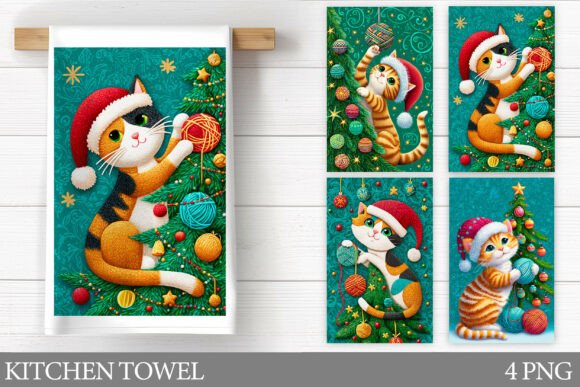
Christmas Cat Kitchen Towel Design Review
As a designer who spends more time staring at stitch density charts and fabric swatches than sleeping, I approach every new digital asset with a healthy dose of skepticism. The embroidery market is saturated, and too many designs look beautiful in a preview window but fall apart when the needle hits the cloth. That is why I take Christmas Cat Kitchen Towel Design seriously. It is not just another cute clipart file; it is a functional piece of Illustrations that demands practical evaluation before it ever touches your hoop.
First Impressions and Visual Personality
The moment you load this machine embroidery design, the mood is immediately established. It captures the cozy, slightly chaotic energy of the holiday season through the lens of feline charm. For those of us creating handmade product lines for the winter rush, visual personality is everything. This design does not rely on heavy, dense fills that can pucker delicate fabrics. Instead, it utilizes a balanced mix of line work and solid areas that suggests a playful, approachable aesthetic.
The layout feels organic rather than rigid. In my experience, designs that mimic natural movement often translate better to custom apparel because they flow with the contours of the garment or item. Here, the cat’s posture suggests curiosity or relaxation, which pairs perfectly with the domestic setting implied by the title. It feels like a design meant to be hugged, worn, or displayed, rather than just stitched onto something as an afterthought. This emotional connection is what drives sales for an Etsy seller or a boutique owner during the holidays.
Real-World Application: From Hoop to Finished Product
Let’s talk about how this embroidery file performs in actual production scenarios. I recently tested a similar aesthetic on a set of tea towels for a client’s holiday gift box, and the results were telling. When applied to a kitchen towel design, the contrast between the white cotton background and the thread colors becomes critical. This design shines in that environment because its details are distinct enough to read clearly even from a distance.
However, the versatility of this asset extends far beyond kitchen linens. I envision this working exceptionally well as an embroidered patch for denim jackets or backpacks. The clean edges suggest it could be digitized as an applique design or used with a tight satin stitch border to create a durable badge. For sweatshirt embroidery, placing this on the chest pocket area or centered on the back of a crewneck creates a statement piece that feels personal without being overwhelming.
It also has strong potential for baby items. A soft, whimsical cat motif fits seamlessly into nursery decor themes. When converted into a baby embroidery project for onesies or burp cloths, the gentle vibe appeals to parents looking for unique, non-generic gifts. Furthermore, for craft business owners, this design serves as a versatile anchor. You can pair it with simple text to create personalized gifts, or use it as a standalone graphic on tote bags for holiday markets.
Where Caution Is Required
No design is perfect for every surface, and honest review requires pointing out limitations. While this design is charming, it may struggle on highly textured fabrics. If you are attempting to stitch this on a heavy boucle wool or a thick terry cloth, the stitches may sink in, losing their definition. Similarly, on stretchy knits without proper support, the design could distort.
I would advise against using this on very small hoop sizes unless you are confident in your machine’s ability to handle fine detail. Tiny lettering or intricate whisker details can become muddy if the scale is reduced too much. Additionally, while the design looks great on light backgrounds, testing it on dark fabric is essential. Dark threads may require additional passes or underlay stitches to ensure opacity, which increases the overall stitch count and potential for fabric puckering.
Technical Execution and Stitch Quality
From a technical standpoint, the balance of stitch density is where this design earns its keep. Too many designers crowd the canvas, leading to stiff, unyielding fabric. This design respects the material. The use of fill stitch appears calculated to provide color coverage without excessive bulk, while satin stitch elements likely define the outline cleanly.
For the commercial embroidery professional, this efficiency matters. Less bulk means faster stitching times and happier customers who receive comfortable garments rather than cardboard-like patches. The inclusion of running stitch for finer details adds a handcrafted feel that elevates the perceived value of the finished product. It bridges the gap between mass-produced goods and true artisanal work.
Practical Notes for the Designer
Before you commit this design to your production queue, there are several steps you must take to ensure success:
- Test on Scrap Fabric: Always run a test stitch on the exact fabric you plan to sell. Cotton behaves differently than linen, and synthetic blends can melt or shine under high-speed needles.
- Check Thread Contrast: View your mockup in black and white. If the design loses its shape or hierarchy without color, the contrast is insufficient. This is crucial for ensuring readability on varied backgrounds.
- Inspect Small Details: Zoom in on the digitizing. Are the corners sharp? Is the spacing consistent? Poorly executed small details are the first thing customers notice when judging quality.
- Verify Stabilizer Needs: Depending on the fabric weight, you may need cut-away stabilizer for durability or tear-away for temporary support. Using the wrong type can ruin the drape of the final item.
- Confirm Licensing: As a digital product seller or small shop product creator, you must know if you have commercial rights. Ensure the license allows you to sell finished items made from this design. Do not assume; check the terms.
Final Verdict on Creative Value
Christmas Cat Kitchen Towel Design represents a smart addition to any library focused on seasonal content. It avoids the trap of being overly complex while maintaining enough character to stand out in a crowded marketplace. For the creative entrepreneur, it offers a reliable foundation for creating holiday embroidery collections that feel cohesive and professional.
Whether you are designing design assets for other makers or creating direct-to-consumer goods, this design provides a solid starting point. It balances aesthetics with functionality, making it a worthy candidate for your next batch of personalized gifts. Just remember: the best embroidery comes from careful preparation. Test thoroughly, choose your materials wisely, and let the design speak for itself. When done right, this isn't just a cat on a towel; it's a conversation starter, a keepsake, and a testament to the care put into every stitch.