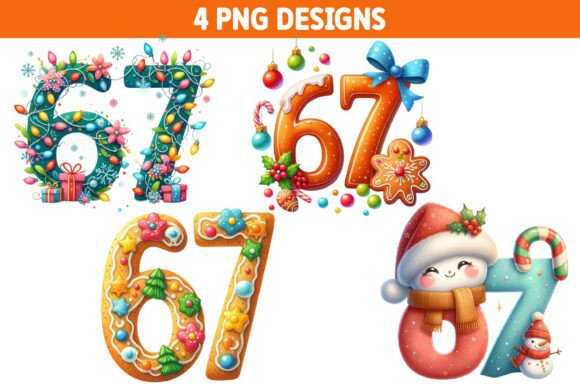
Funny 67 Christmas Clipart: A Designer’s Review for Modern Illustrations
When I sit down to review a new design asset for a client project, my first question is always practical: does this solve a visual problem? Does it elevate the brand, or does it clutter the message? Recently, I was tasked with developing a seasonal marketing campaign for a boutique handmade candle company. They wanted something that felt festive but not cliché—something that would pop on Instagram but also look polished on product packaging. That is when Funny 67 Christmas Clipart caught my eye.
As an experienced graphic designer who works daily with branding, marketing visuals, and digital design assets, I don’t just look at how "cute" an illustration is. I look at composition, negative space, scalability, and emotional resonance. After testing Funny 67 Christmas Clipart in several mockup scenarios, here is my professional breakdown of whether this graphic design asset belongs in your creative workflow.
First Impressions: Mood and Visual Style
The immediate vibe of Funny 67 Christmas Clipart is approachable humor mixed with traditional holiday warmth. Unlike generic clipart that feels stiff or overly corporate, these illustrations have a playful energy. The style leans toward modern, hand-drawn aesthetics, which aligns perfectly with current trends in handmade business branding and small business branding.
For a designer, this means you are getting a design bundle that doesn’t require heavy manipulation to feel fresh. The characters and elements possess distinct personalities. Whether you are creating social media graphics or designing stickers for a craft fair, the humor adds a layer of engagement that static, formal illustrations often lack. It feels like a creative design choice that says, "We take our holidays seriously, but not ourselves."
Real-World Application: Where This Asset Shines
In my test project for the candle company, I used elements from Funny 67 Christmas Clipart across multiple touchpoints. Here is where the asset performed exceptionally well:
- Packaging Design & Product Labels: The illustrations have enough detail to stand out on small labels but remain legible. When applied to wax seals or hang tags, they added a tactile, premium feel without looking cheap.
- Social Media Graphics: For Instagram posts and Pinterest pins, the vibrant and humorous nature of the illustration stops the scroll. It creates an immediate emotional connection with the viewer, driving higher engagement rates compared to standard stock photography.
- Etsy Products & Print-on-Demand: If you are a digital seller or run an Etsy shop, this SVG design (assuming vector availability) or high-res PNG is versatile. It translates beautifully to t-shirt design, mugs, and tote bags. The humor appeals to a broad demographic, making it a safe yet trendy choice for print-on-demand campaigns.
- Craft Projects: For users of Cricut or Silhouette machines, these files are ideal for vinyl decals, ornaments, and sticker design. The clean lines typical of good clipart ensure crisp cuts and minimal weeding time.
Strategic Placement: Large vs. Small Contexts
Not every design asset works everywhere. Based on my experience with Funny 67 Christmas Clipart, there are clear boundaries on where to place these elements for maximum impact.
Where it works best:
- Hero Graphics: Use these illustrations as focal points on landing pages or email headers. They command attention and set a fun tone immediately.
- Decorative Accents: Scatter smaller elements around text blocks to break up monotony. They add visual interest without overwhelming the copy.
- Themed Collections: If you are launching a holiday collection of web design templates or editorial design layouts, this clipart provides a cohesive theme that ties the whole package together.
Where to use carefully:
Avoid placing these illustrations in contexts that demand strict professionalism or minimalism. They do not fit well in professional corporate materials such as annual reports, legal documents, or serious financial brochures. Additionally, be cautious with crowded layouts. Because the illustrations have character and detail, they can compete with text if not given enough breathing room. In minimalist branding, the humor might feel too busy unless balanced with ample white space.
Technical Considerations for Designers
Before integrating Funny 67 Christmas Clipart into a final deliverable, there are technical checks every designer must perform. Ignoring these steps can lead to blurry outputs or licensing issues.
File Format & Editability: Check if the asset includes an SVG design or vector file. Vectors allow you to scale the illustration to any size without pixelation, which is crucial for large-format printing like banners or vehicle wraps. If only a PNG design is provided, ensure the resolution is at least 300 DPI for print projects. Inspect the transparency; a clean cutout against a transparent background saves hours of masking work in Photoshop or Illustrator.
Color & Contrast Testing: Always preview the asset in black and white. This helps you assess the visual hierarchy and ensures the shapes hold up without color reliance. Test the clipart on both light and dark backgrounds to check contrast levels. If the colors clash with your brand palette, use the hue/saturation tools to adapt them while maintaining the integrity of the design.
Typography Pairing: The playful nature of Funny 67 Christmas Clipart pairs well with specific font styles. It works harmoniously with handwritten font choices for a personal touch, or display font styles for bold headlines. Be cautious with rigid sans serif font pairings, as they might create a tonal disconnect. A script font can enhance the festive mood, but ensure readability remains intact.
Impact on Brand Trust and Engagement
Using high-quality, humorous assets like Funny 67 Christmas Clipart directly influences audience perception. In a crowded digital marketplace, brands that show personality tend to build stronger community connections. These marketing visuals signal that the brand is relatable and human.
However, professionalism is key. The humor should never undermine the quality of the product being sold. By using well-composed illustrations, you maintain brand consistency and visual trust. Customers associate the polish of the design with the polish of the product. If your design assets look amateurish, customers may assume the product quality is low. Conversely, a thoughtful integration of funny, festive clipart elevates the perceived value of your commercial design efforts.
Final Verdict: Is It Worth the Investment?
For designers working on seasonal campaigns, craft fairs, or online product launches, Funny 67 Christmas Clipart is a strong contender. It offers the right balance of whimsy and structure, making it adaptable for everything from sublimation design to blog visuals.
Remember to verify the commercial license before using it for client work. Ensure you have the rights to modify the colors and integrate the illustration into your proprietary designs. When used correctly, this asset can save you time, reduce the need for complex custom drawing, and deliver a finished result that feels both fun and professionally executed.
If you are looking to inject some holiday cheer into your next creative marketplace listing or client project, give Funny 67 Christmas Clipart a try. Just remember to test, preview, and place it strategically. Good design is about more than just pretty pictures; it’s about solving problems with clarity and charm—and this clipart delivers on both fronts.