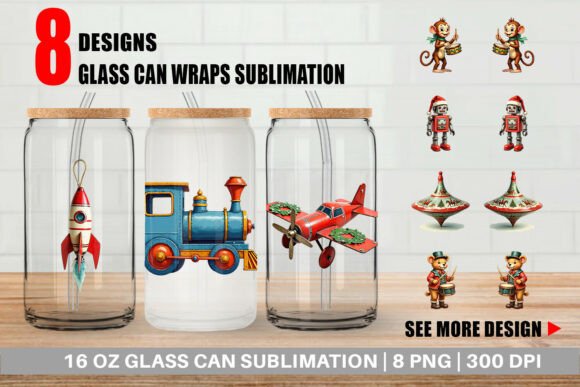
Retro Christmas Tin Toy Glass Can Wrap Illustrations
When I sit down to plan a new content series or refresh an existing editorial calendar, the first thing I look for is not just a pretty image, but a graphic design asset that carries weight. It needs to communicate a mood instantly, support the narrative, and hold up under the scrutiny of high-resolution screens and mobile thumbnails alike. Recently, I evaluated the Retro Christmas Tin Toy Glass Can Wrap for potential integration into my digital publishing workflow. As someone who has spent years refining blog graphics and editorial design, I approached this review with a critical eye toward visual hierarchy, brand consistency, and reader engagement.
The immediate impression of this asset is one of nostalgic warmth. It evokes the tactile joy of mid-century holidays, capturing the specific aesthetic of vintage tin toys encased in glass canisters. This is not merely decorative; it is atmospheric. For publishers looking to inject a sense of playful sophistication into their website header areas or featured images, this style offers a distinct alternative to the sterile, overly polished stock photography that saturates the internet. It feels lifestyle-focused yet artistic, bridging the gap between modern design sensibilities and classic charm. In an era where reader trust is built through authentic visual storytelling, assets like the Retro Christmas Tin Toy Glass Can Wrap help establish a unique brand identity that stands out in crowded social feeds.
Elevating Editorial Quality Through Nostalgic Visuals
In the world of content marketing, the difference between a scroll-past and a click-through often comes down to the initial emotional hook. The Retro Christmas Tin Toy Glass Can Wrap provides a strong visual anchor. Its color palette—likely rich reds, deep greens, and metallic accents—creates a festive yet refined atmosphere. This makes it particularly effective for niches such as lifestyle blogging, home decor, holiday gift guides, and creative entrepreneurship.
When used correctly, this asset does more than decorate; it sets expectations. A visitor landing on a page adorned with these illustrations immediately understands the tone: cozy, curated, and thoughtful. This aligns perfectly with the goals of small business branding and creative design professionals who want to convey quality without appearing corporate. The intricate details of the tin toy elements suggest care and attention to detail, qualities that readers subconsciously associate with high-quality written content. By integrating such design assets into your digital guide covers or downloadable printables, you signal that the information inside is equally well-crafted.
Strategic Applications in Real Publishing Workflows
So, where exactly does this illustrations package fit into a robust digital strategy? I have mapped out several high-impact use cases based on current trends in web design and affiliate marketing:
- Pinterest Pins and Social Media Graphics: Pinterest remains a powerhouse for long-tail traffic. The vertical format of pins benefits greatly from the detailed, central focus of the tin toy imagery. These visuals are highly "saveable," increasing the lifespan of your content.
- Newsletter Headers and Banners: Email open rates are driven by subject lines, but click-through rates are influenced by the visual experience within the email. Using this asset for seasonal newsletter headers adds a layer of professionalism and thematic cohesion that encourages readers to engage with your affiliate marketing links.
- Digital Products and Lead Magnets: If you are creating a lead magnet such as a holiday checklist or a gift-giving guide, wrapping it in a cover featuring the Retro Christmas Tin Toy Glass Can Wrap increases perceived value. It transforms a simple PDF into a premium digital product.
- Blog Featured Images: Standard blog posts often suffer from visual fatigue. Replacing generic photos with custom blog graphics derived from this asset can break the monotony and improve visual hierarchy, guiding the reader’s eye directly to your headline.
- Canva Templates: For creators who need speed, incorporating these vector or high-res raster elements into editable Canva templates allows for rapid content production while maintaining a consistent brand identity across all platforms.
Impact on Content Performance and User Trust
From a technical SEO and user experience perspective, the choice of visual assets directly influences how users interact with your site. High-quality, thematically appropriate images reduce bounce rates by keeping visitors engaged longer. The Retro Christmas Tin Toy Glass Can Wrap supports this by providing a visually stimulating environment that feels intentional rather than accidental.
Furthermore, consistent use of such distinctive design assets strengthens category recognition. Over time, your audience will begin to associate that specific retro aesthetic with your brand voice. This subconscious association builds reader trust, as familiarity breeds comfort. When a user sees those familiar colors and shapes, they know they are in a space where quality content awaits. This is crucial for online educators and affiliate marketers who rely on credibility to drive conversions.
Additionally, these visuals support better click-through potential. In a sea of text-based search results, a thumbnail featuring a charming, detailed illustration is more likely to catch the eye than a plain background. This subtle advantage can significantly boost organic traffic over time.
Where Caution Is Required
No single asset is a silver bullet. While the Retro Christmas Tin Toy Glass Can Wrap is versatile, there are contexts where it may not be the optimal choice. Publishers should exercise caution when using this asset in the following scenarios:
- Small Mobile Thumbnails: The intricate details of tin toys and glass reflections can become muddy when scaled down to tiny favicon sizes or mobile sidebar widgets. Always test legibility at small resolutions.
- Serious Professional Niches: For industries requiring strict minimalism, such as legal services, financial auditing, or serious medical advice, this playful aesthetic might undermine authority. It is better suited for lifestyle, hobby, and creative sectors.
- Text-Heavy Blog Images: If you overlay large amounts of text, ensure the background does not compete for attention. The complexity of the wrap design requires ample negative space to remain readable.
- Low-Contrast Backgrounds: To maintain clarity, avoid placing dark-toned illustrations on similarly dark backgrounds. Contrast is key for accessibility and readability.
Practical Publisher Notes for Implementation
Before integrating the Retro Christmas Tin Toy Glass Can Wrap into your live projects, I recommend running through a rigorous testing protocol. First, check the file size. Large, uncompressed images can slow down your website, negatively impacting your Core Web Vitals and SEO rankings. Compress images properly using modern formats like WebP to balance quality and performance.
Next, consider typography pairing. Test the illustrations alongside various font styles. A bold display font can echo the retro vibe, while a clean sans serif font can provide modern contrast. Avoid mixing too many competing styles; let the illustration be the star. Also, preview the asset in black and white to ensure the composition holds up without color reliance—a good practice for accessibility.
Finally, and most importantly, verify your commercial license. Ensure you have the right to use these design assets for monetized websites, affiliate pages, and paid digital downloads. Using creative marketplace assets without proper licensing can lead to costly legal issues. Confirming commercial design rights allows you to use the Retro Christmas Tin Toy Glass Can Wrap with confidence, knowing your hard work is protected.
In conclusion, the Retro Christmas Tin Toy Glass Can Wrap is a powerful tool for any publisher seeking to elevate their visual storytelling. It brings a touch of nostalgia and artistry that resonates with modern audiences craving authenticity. By applying it strategically across your editorial layouts, social media previews, and downloadable resources, you can create a cohesive, professional, and engaging digital presence that drives both traffic and trust.